Lights
Dive lights: beam pattern, signaling, and charging matter as much as brightness
Updated 12 Mar 2026
A technical buying guide to dive lights, focused on beam shape, signaling use, charging design, handheld versus canister formats, and the current European-heavy manufacturer landscape.



What this category is
A dive light can be a tiny backup clipped out of the way, a compact primary for ordinary night dives, or a much more serious canister system intended for repeated low-visibility or technical use. The category looks simple at first, but in practice lights vary a lot in beam angle, battery format, switching, charging method, and how well they handle real underwater use with gloves and stress. For many divers the best light is not the brightest one, it is the one that feels predictable, easy to maintain, and easy to trust in the conditions they actually dive.
Key differences
Beam pattern
Beam pattern matters more than raw brightness. A narrow spot beam, for example around five degrees, throws light farther and stays more defined in lower visibility, which is why cave, wreck, and signaling-oriented lights often use it. In hazier water a tight beam creates less backscatter and is much easier to use for communication because a teammate can clearly read where the light is being pointed. A broad flood beam is better for lighting up a scene at short range, reef viewing, and video work, but it loses punch faster and can look messy in particulate water.
Handheld versus canister
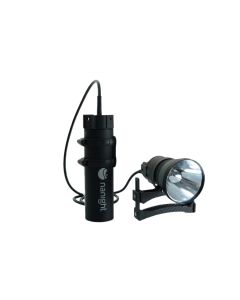
A handheld light is simpler, easier to travel with, and plenty for a large share of recreational diving. Canister systems move the battery off the lamp head and onto the diver, which allows smaller heads, longer burn times, and more sustained high output, but they also add bulk, cable routing, and cost. Most divers do not need a canister light until the combination of dive length, environment, and use case clearly justifies it.
Recreation versus imaging
Some lights are built first for signaling and navigation, others for even scene lighting. A tight beam that is excellent for communication may be a poor fit for photo or video work, while a wide flood that looks beautiful on a subject can be weak as a true primary in darker water. Buyers need to decide which role comes first.
What to look for
Beam pattern for visibility and signaling
Beam shape should come before headline lumen numbers. Divers doing signaling, darker wreck routes, overhead training, or lower-visibility local diving often benefit from a narrower, more concentrated beam. Divers who mainly want to illuminate a wide area at short range, or who plan to pair a light with imaging, often prefer a broader beam.
Charge port versus opening the body
Charging design is a real ownership issue. A sealed charging port or external charging contact lets the diver recharge the light without opening the body every time. That reduces the chances of dirt on O-rings, crossed threads, or small mistakes during routine charging. Lights that must be opened for every charge can still be excellent, but they ask more care from the owner and create more opportunities for wear or user error over time.
Battery type and service life
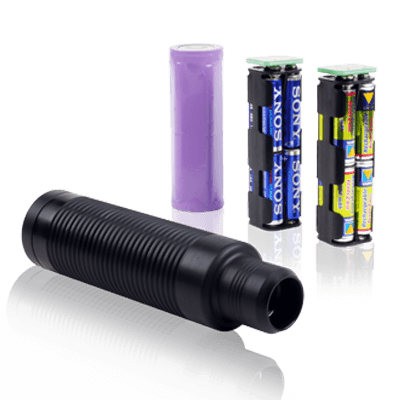
Battery format changes the whole ownership experience. Integrated rechargeable systems are tidy and convenient, especially for frequent divers, but eventually tie the owner to the product's charging ecosystem and long-term battery support. User-swappable cells can be more flexible for travel and backups, but they make sealing discipline more important. Burn time should be judged honestly, because a compact travel light with moderate output can be a better fit than an overpowered model that steps down quickly.
Switching and glove use
A good magnetic or sealed switch is easier to trust underwater than a fiddly interface that becomes awkward with thick gloves. Buyers should also check how the light mounts, whether the beam is clean rather than ringy, and how easy it is to confirm battery state before the dive.
Notable current options
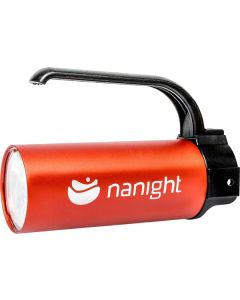
The strongest part of the current market is how distinct the manufacturers have become. Nanight gives a clear Swedish reference point for tighter-beam, communication-friendly lights and charging systems that do not require opening the body. Bersub remains a strong French specialist name in higher-end underwater lighting. Green Force continues to matter in Belgium for modular handheld and canister-oriented systems. FINNSUB is still a useful Czech reference for technical and canister-light thinking even if its web presentation is less image-friendly. ERA Underwater gives Sweden another, more niche imaging-oriented lighting source. Apeks and Scubapro both matter for mainstream premium handheld torches that many recreational divers will actually see in shops. Mares remains relevant as a broad scuba brand with torch options that sit closer to the ordinary recreational buyer than the cave or expedition niche.
How to choose
If you mostly dive recreationally
A simple handheld primary with honest burn time and a clean beam is usually the right answer. Ease of charging and switch confidence matter more than chasing extreme output.
If you dive in poorer visibility
A tighter beam becomes more valuable because it punches farther, creates less backscatter, and works better for communication and signaling.
If imaging matters most
A broader, smoother flood matters more than signaling punch. The best choice is often the light that gives the most even scene coverage rather than the longest throw.
For long-term ownership
Charging convenience, sealing, and switch confidence matter just as much as raw output. The best light is the one that makes underwater tasks easier, not the one that merely sounds strongest on paper.